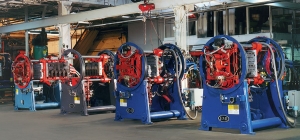
Mold Handling Machines Vs Manual Transfer: Where Bottlenecks Begin
Mold transfer is where a steady foundry process can quietly lose its rhythm. When a mold does not move on time, molding, cooling, shakeout, core setting, coating, and downstream handling can all feel the effect. We recommend looking closely at this connection point, because small manual delays can grow into larger production problems over a full shift.
As November planning begins, your year-end data can help show where those delays start. Before winter maintenance windows and next-year capital planning, it is worth comparing manual transfer with mold handling machines to see which approach better supports stable throughput.
Where Manual Transfer Creates Hidden Capacity Loss
The time required to physically move a mold is only one part of the transfer window. In many foundries, the real delay begins before the mold is picked up and continues until the travel area is clear for the next cycle.
When we review a manual transfer process, we encourage teams to track the full sequence:
- Waiting for an available operator
- Confirming that the next station is ready
- Locating and positioning lift equipment
- Moving and aligning the mold
- Clearing the route for the next handoff
A few extra moments at each point may not stand out on their own. Over time, though, those pauses can limit how consistently molding equipment can run. The issue may look like slow output at the molding line, even when the root cause is an uneven handoff farther downstream.
Labor adds another layer of uncertainty. Manual movement depends on staffing, operator experience, break coverage, shift changes, and other work that needs attention. Skilled people can still struggle to keep a steady pace when they are pulled between mold transfer, inspection, material handling, and unexpected production needs.
That uneven flow can move through the foundry. A delayed transfer may leave molds waiting in front of molding equipment while cooling, shakeout, or finishing stations run short on work. The bottleneck is not always located where production finally slows down. Often, it begins in the gaps between operations.
How Mold Handling Machines Stabilize Cycle Times
Mold handling machines bring a more defined movement path to the process. Instead of relying entirely on changing manual handoffs, automated or semi-automated equipment can move molds through a set sequence and pace. That repeatability gives production teams a clearer picture of what the line can realistically produce.
The benefit is not simply moving a mold faster. Controlled handling can reduce the stop-and-start conditions that cause one area to build a queue while another waits. Less waiting for personnel, lift equipment, load alignment, or open travel paths helps keep transitions more predictable.
With steadier transfer times, we can help foundry teams identify the actual constraint in the system. If mold movement becomes more consistent, it is easier to see whether the next limit is molding capacity, cooling space, shakeout performance, staffing, or downstream material flow. That makes planning more practical because the team is solving the right problem instead of guessing.
Consistent transfer also supports better day-to-day coordination. Supervisors can build production schedules around a more dependable pace, and maintenance planning becomes easier when equipment movement follows a known pattern rather than changing from shift to shift.
Compare Labor, Safety, and Mold Condition
Headcount alone does not show the full labor burden of manual transfer. We recommend considering the time spent walking, coordinating equipment, waiting for a clear route, training operators, and covering absences. The more important question is whether the right resources are available every time a mold needs to move.
Mold movement may involve heavy loads, tight floor areas, repeated handling, and interaction between people and mobile equipment. A well-planned handling approach can help define travel paths and reduce unnecessary manual intervention. Throughput and safer material flow should be evaluated together, not as separate projects.
Transfer consistency can also affect mold condition. Vibration, misalignment, rough handling, or long waits between stations may create process concerns depending on the application. More controlled movement can support repeatable positioning and cleaner handoffs, but the equipment must fit the work.
Before selecting a solution, we suggest reviewing:
- Mold sizes, weights, and production volume
- Available floor space and travel distance
- Current queue locations and cycle targets
- Operator touchpoints and equipment access
- The needs of molding, cooling, shakeout, and finishing
A handling setup that works well for one process may not fit another. The best choice depends on your mold requirements, layout, production mix, and operating goals.
Match Equipment to the Full Foundry Workflow
A process map is a strong starting point. Document every transfer step from mold release through downstream handling. Include where molds wait, how long they wait, who moves them, what equipment is involved, and where travel routes become crowded.
That review often reveals whether the largest need is faster movement, better buffering, improved routing, lower labor dependence, or a mix of several needs. It also helps prevent a common mistake: improving one station without checking whether the next station can accept the added flow.
We view mold handling machines as part of a larger foundry system. Their value depends on how they connect with green sand molding equipment, core production processes, automation, cooling capacity, shakeout, and later operations. A transfer upgrade that sends molds forward faster can simply move the bottleneck if downstream capacity is not ready.
Flexibility matters as well. Product mix can change, capacity needs can grow, and maintenance access should remain practical. Some foundries may benefit from phased automation, while others may need equipment repairs, remanufacturing, or OEM parts support to improve current operations before adding new machinery.
Plan Your Next Throughput Improvement Before Winter
November is a useful time to turn year-end production records into a focused transfer review. Look for repeated delays, long queues, idle stations, labor gaps, and points where mold movement becomes unpredictable. Then consider what those interruptions mean for capacity, safety exposure, mold condition, and schedule reliability.
The goal is not to assume every manual task needs full automation. Start by finding the highest-impact handoff, understanding why it slows, and matching the response to the full process. A clear plan before winter maintenance and budgeting can help create a steadier path to throughput in the months ahead.
Improve Flow With the Right Equipment
At EMI, we help foundries evaluate process needs and identify equipment that supports more consistent material movement. Explore our mold handling machines to see how integrated solutions can reduce transfer delays and support smoother production. Our team can help you align handling capabilities with your throughput, maintenance, and operational goals.