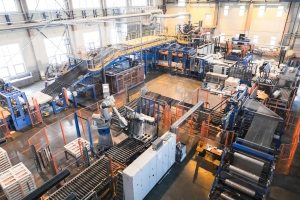
Leveraging Foundry Equipment Layout for Smarter Automation Gains
Turn Your Foundry Layout Into a Profit Center
Foundry automation does not start with a robot or a conveyor. It starts with where you put your foundry equipment. If the layout forces parts to zigzag across the plant, even the best automation will struggle. When the layout is smart, robots, pouring systems, and finishing cells can actually do the work they were built to do.
In many foundries, layout is something that just “happened” over the years. A new molding line got squeezed into a corner, a core machine landed where there was power, and finishing cells filled whatever space was left. That approach shows up fast when orders surge at the end of the year. We have seen how better layout decisions directly raise throughput, improve safety, and make labor more effective; we build that thinking into every system we design and support.
Why Layout Decisions Make or Break Automation ROI
If your molding lines, core machines, aluminum pouring areas, and finishing cells are in the wrong places, your automation is forced to fight the layout. Robots end up moving parts too far. Conveyors twist around obstacles. Forklifts weave through people and machines. All of this adds time and risk instead of taking it away.
Poor layout brings hidden costs that keep stacking up, such as:
- Longer takt times because parts travel too far
- Extra work in process piling up between stations
- Double-handling parts with both conveyors and lift trucks
- More frequent changeovers and adjustments when lines back up
These problems feel even sharper when Q4 orders spike and everyone is trying to hit shipping dates before the holidays and winter weather disruptions. Operators work harder, but the line still slows because the path through the plant is not clear.
When you start with layout-first thinking, your automation plan changes. Material moves in shorter, simpler paths. Controls systems are easier to tie together. Performance targets become realistic because your layout supports what the foundry equipment is trying to do, instead of blocking it at every turn.
Mapping Material Flow for High-Performance Foundry Equipment
Before you shift a single machine, you need to understand how work really moves today. That means tracking the full journey of molds, cores, molten metal, and castings, from the very first green sand mold to the final finishing step. On paper it can look clean; on the floor it can be very different.
A simple way to start is to walk the flow and mark each step:
- Where green sand molding actually starts and ends
- How cores move from core production into molding or aluminum casting
- How molten metal reaches each pouring zone
- How castings travel to cooling, shakeout, and finishing
As you map, look for choke points. Do molds backtrack past each other between molding and pouring? Is shakeout too far from cooling, forcing hot castings to cross busy walkways? Are finishing cells split in a way that sends parts in circles?
We focus on these questions when we lay out systems. Our engineering teams work with current-state and future-state layouts side by side. We study how material flows at each stage, then use simulations and throughput models to test new paths. The goal is simple: keep material moving in a steady, single direction, with foundry equipment placed to support that flow instead of breaking it.
Designing Cell-Based Layouts for Flexible Automation Gains
One powerful way to line up layout and automation is to move toward cell-based designs. Instead of long, scattered lines, you group related foundry equipment into compact, high-throughput cells. Each cell has what it needs to run that family of castings, without sending parts all over the plant.
A typical casting cell might bring together:
- Molding or core setting
- Aluminum or iron pouring
- Cooling and shakeout
- Initial trimming or finishing
In a cell like this, robots have short moves and clear tasks. Conveyors have simpler routes. Operators can see more of the process from one spot. This setup also makes it easier to add automation over time. You can start with a semi-manual cell, then add a robot for pouring, a pick-and-place for cores, or an automated finishing station when you are ready.
Modular cells let you flex with changing demand. You might run a dedicated cell for a high-volume part and another, more flexible cell for short-run or seasonal work. We help customers balance those choices so they are not locked into one pattern. The result is a layout that can grow and shift without a full plant overhaul every time a product line changes.
Integrating Safety, Maintenance, and Ergonomics Into Layout
Automation only pays off when people can work around it safely and comfortably. That means safety and ergonomics cannot be an afterthought. They need to be part of the layout right from the start, not added as patches once the equipment is already in place.
Smart layouts pay attention to things like:
- Clear sight lines for operators, technicians, and forklift drivers
- Safe walkways and access points around robots and conveyors
- Proper guarding, light curtains, and safety-rated barriers
- Logical placement of controls, HMIs, and emergency stops
Maintenance is another key part of the picture. When you place foundry equipment with access in mind, technicians can reach what they need quickly, even during peak production. We design layouts that shorten maintenance routes, isolate dirty or noisy processes from cleaner areas, and reduce awkward lifts and reaches. Better ergonomics help cut down on injuries and unplanned downtime, which keeps both your people and your automation running stronger.
Planning Q4 Layout Changes for a Stronger Start
Late in the year, many foundries are pushing hard to finish orders while also planning for what comes next. That is a smart time to step back and ask a simple question: is our layout ready for the level of automation we want?
You do not have to change everything at once. A phased roadmap can make layout and automation gains much more manageable:
- Quick wins: targeted moves of foundry equipment to remove clear bottlenecks
- Mid-term: new conveyor paths or small robot cells that relieve busy manual areas
- Long-term: fully integrated green sand molding, core, aluminum casting, and finishing lines
At EMI, we bring layout strategy together with equipment design, controls, and long-term support. We look at how your process runs now, how you want it to run in the future, and how your plant space and climate challenges affect those plans. By tying layout decisions directly to automation goals, we help turn your foundry equipment layout from a fixed constraint into a real profit center.
Get Started With Your Project Today
If you are ready to update or expand your molding line, we can help you choose the right foundry equipment to support your production goals. At EMI, our team works with you to understand your process, constraints, and performance targets before recommending a solution. Tell us about your project and timing, and we will provide practical options and clear next steps. To start the conversation, simply contact us.