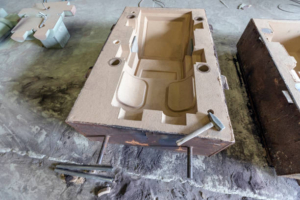
What Shifts in Casting Flow Rates to Expect This July
Every July, foundry production feels the heat, literally. We start noticing casting results shift, but what usually drives that change isn’t mechanical failure. It’s the slowdown of materials under hotter conditions. Flow rate variations, especially when working with molding machines during longer cycles or large runs, become more noticeable this time of year.
Temperature spikes don’t just make people uncomfortable. They also change how molds fill, how quickly metal spreads, and how surface quality holds up. As heat and humidity rise, so does the moisture in the sand. That affects flow behavior from the moment the metal hits the system. We watch for these patterns throughout July because they’re subtle at first, but they grow more unpredictable without preventive steps.
Monitoring Flow Rate Variations in Summer Conditions
Once the floor heats up and humidity thickens, metal starts moving differently. Flow rates don’t drop all at once. They drift. Sluggish movement one hour, resistance the next.
- We see early signs of flow trouble in the way the metal spreads in the mold. Edges blur, fill times stretch, or cavities stall near the end.
- Higher speed cycles can suffer more, especially during multi-pour sequences where heat doesn’t have time to clear between cycles.
- We track flow line markings and fill pressure variables from pour to pour. When results shift from one cycle to the next, it often points to hidden thermal interference or pressure lag.
Watching closely during mid-day cycles is important. That’s when the machines and sand are already loaded with trapped heat, and that messes with pour consistency across the board.
How Molding Surfaces and Machine Heat Affect Flow
Molding machines hold more than their settings. They also hang onto heat after repeated use, especially during July. That extra surface warmth could be just enough to change the flow pattern once the metal hits the mold.
- With every cycle, we monitor for pattern swelling or parting line misalignment. When the molds grow warmer than what the specs were set for, thermal expansion changes the way metal routes through cavities.
- We’ve seen clean-running molds from spring lose symmetry in July simply from overheating clamps or plates. Even a small warp can slow a pour.
- The back half of a long run is when most issues start showing up. Molding machines begin to lag thermally, not mechanically. That’s when slow releases and uneven draw tension point to heat retention deep in the press or along core lines.
Time of day matters, too. Morning performance won’t match mid-afternoon results, which makes checking machine surface temps just as valuable as checking pressure.
Mold Media and Gating: Adjustments for July Conditions
Even when the gating system worked well in cooler weather, sudden heat shifts can cause turbulence during pour-in. Slower reaction from the media adds resistance, and that shows up in the way molten metal behaves.
- Turbulence often begins in the downsprue where the metal should flow clean. If we start getting splash or uneven filling, that’s a sign that the gate flow is reacting to heat stress.
- Sand takes on more water as ambient humidity grows. That extra dampness changes both cure timing and core permeability. Metal might push back or stall inside areas that were once filled smoothly.
- Resin reaction speeds change. What we planned for in spring settings won’t always match today’s shop floor behavior. We match our resin response not just to spec, but to what’s actually happening across the line.
Making adjustments at the gating or venting points helps, but only if we’ve tracked what changed from the last successful cycle. Pushing forward without those observations usually leads to rework.
Common Mid-Summer Downtime Triggers and How to Prevent Them
It’s not always a broken system that stops a July shift. More often, it’s the small things that go unchecked—build-up in the mold cavity, irregular curing, or shifts that creep in after hours of steady production.
- Flow stalls often hide behind thermal blockages. That means parts of the mold are holding too much heat, crusting resin, or limiting gas flow. Metal then slows mid-mold.
- When curing becomes inconsistent, cold shuts or misruns pop up more frequently. These are the kinds of defects that don’t get caught until parts hit review or finishing.
- Clean-out cycles get skipped when everything looks okay from the outside. But waiting too long to reset between pours lets buildup and bleed-off grow inside the mold cavity. That creates downtime that wasn’t on the schedule.
We’ve learned to time our resets based on run behavior, not just shift calendars. When things start to bog down three hours in, that’s when a cycle clean makes more sense than pushing one more pour.
When the Pour Slows Down: Slow Flow Rate Impact on Casting Quality
Slow metal doesn’t just delay the schedule. It affects how the finished part looks, holds up, and measures out. We’ve seen slower July pours lead to soft corners, misaligned walls, and surface flaws that didn’t show up in spring work.
- As flow slows, metal cools too soon and spreads unevenly. That usually leaves rough textures or visible layering marks on larger surfaces.
- Dimensional accuracy takes a hit, especially around deep draw areas or supported walls. A few seconds of hesitation in the pour flow can shrink hold-off strength inside the mold.
- If these signs start stacking, we pay attention to the release response too. If cores release at an angle or show drag, we know the part is warping during thermal transfer. That tells us the slowdown isn’t just outside the mold, it’s inside the media too.
Fast pours don’t always equal better results, but consistent pour behavior always gives us a better shot at quality.
Getting Through the Heat with More Control
Every July, production routines get tested. The pressure to keep things moving during heat waves can make adjustments feel too small or too late. But what really makes the difference is staying ahead of the drift.
We don’t wait for metal to stall. We watch the progression cycle by cycle, from mold surface response to release finish. Small shifts like adjusting cure timing, tracking mold temps more often, or tightening clean schedules help us hold quality.
The key is recognizing that casting systems don’t behave the same in July. Reading our results early lets us adapt without losing a full shift to rework. When we stay in sync with what the mold is telling us, we stay productive through the heat.
Are midsummer casting issues like uneven fill or surface distortion disrupting your production line? With July’s rising shop floor temperatures, having the right tools makes all the difference. At EMI, we rely on our molding machines to keep pour behavior steady, so your results stay consistent even when the heat is high.
We’re here to support your operation with expert advice on setup options or ways to keep your line running smoothly throughout the season, reach out and let’s work together to hold the line all summer long.