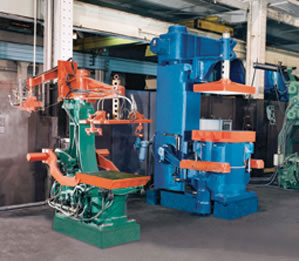
Rethinking Foundry Equipment Layout Around Casting Systems
Foundry layout is not just about where you can squeeze in one more machine. The way your plant is arranged around your casting systems can either support smooth flow or fight your team all day long. When the layout is right, you get better throughput, safer work areas, and more consistent castings with less stress on your people.
In many foundries, fall is the time when next year’s production plans become real. Rising energy costs and ongoing labor shortages only add pressure. That makes late in the year a smart moment to step back and ask a bigger question: are we organizing around our casting systems, or are we still living with a path that grew piece by piece over decades?
Turning Your Foundry Layout Into a Strategic Advantage
When casting systems sit at the center of layout planning, the foundry starts acting like a single system instead of a collection of machines. The path of metal, molds, sand, and scrap becomes clearer and easier to control. That control shows up in:
- Higher throughput without adding shifts
- Less wasted motion for operators and lift trucks
- Lower energy use per casting due to shorter travel and tighter timing
- Fewer quality surprises caused by temperature swings and handling
Late-year layout reviews can match your floor to the next year’s mix, order volume, and staffing. Modern automated casting systems do not want to sit in an old maze. They thrive when equipment, material handling, and support stations are arranged to match their rhythm.
Why Traditional Foundry Layouts Hold You Back
Many shops still run layouts that grew like weeds. Melting is in one corner, molding along a wall, shakeout pushed wherever there was space, and material handling trying to tie it all together. Over time, every new machine gets bolted into the first open spot.
That creates what we all know as “spaghetti flow.” Metal, molds, and people twist around each other:
- Long ladle runs across the floor
- Forklifts cutting through walkways
- WIP stacked in random pockets waiting for the next step
- Operators walking farther than the casting actually travels
These patterns hide bottlenecks because the true path is hard to see. They also put stress on quality. The longer molten metal is in the air or on the move, the more it cools and the more risk at each transfer point. It also makes it harder to grow production without adding even more chaos.
Designing Layouts Around Modern Casting Systems
When we treat casting systems as the backbone, everything changes. The casting cell becomes the center, and other equipment lines up to feed and support that core. Think of the cell as the place where timing, temperature, and motion all must be right.
A modern, logical loop might look like this:
- Charge prep and melting set to one side of the casting system
- Metal treatment and holding close to the pouring station
- Molding feeding the casting system on a clear, repeatable path
- Cooling, shakeout, and sand handling arranged in a tight loop back to the sand system and scrap return
Instead of islands of equipment, you get a closed, connected flow. Metal travel is shorter, so you hold temperature more easily. Operators spend less time walking and more time running the process. Predictable takt times become possible, which helps planning and maintenance.
Key Layout Principles That Protect Quality and Throughput
A strong layout starts with flow, not building lines. We like to sketch the ideal path of metal, molds, and castings first, then see how that fits the real walls and columns. Right angle turns, cross-traffic with forklifts or ladles, and dead ends are warning flags.
To protect quality and throughput, focus on:
- Keeping molten metal paths as short and straight as possible
- Reducing handling between pouring and full solidification
- Avoiding vibration or impact near molds during early cooling
- Isolating dusty or high-vibration tasks away from precision steps
Visibility and access matter just as much. Operators need clear sightlines to key casting system components like pouring devices, mold indexes, and cooling sections. Maintenance teams need safe, fast access for service. Hot zones should be clearly separated from main walkways so people can move safely, even when the floor is busy.
Integrating Automation and Material Handling for the Future
Modern automation does not like guesswork. Robots, automatic pouring, and advanced casting systems expect consistent distances, heights, and approach angles. If paths are makeshift, automation never performs as well as it should.
Upgrading layout around casting systems often means shifting from manual moves to more controlled methods, such as:
- Conveyor systems for molds and castings that keep pace with the line
- AGVs or similar vehicles on fixed routes between molding, pouring, cooling, and shakeout
- Standardized transfer stations with clear in-and-out points
Flexibility should be built in from the start. That can mean leaving “expansion lanes” beside molding lines for an extra machine later, or planning spots where a second pouring unit or finishing cell can plug in without ripping up the whole floor. Good planning today saves painful rework when orders grow.
Planning a Phased Layout Upgrade Without Losing Production
Most foundries cannot stop everything for a full rearrange, especially in regions with weather swings like we see around Ohio where winter planning and summer heat both affect operations. The answer is a phased roadmap that respects production needs.
A simple approach might include:
- Assessment and data collection around current flow, bottlenecks, and risks
- 3D layout modeling to test options virtually before moving a single machine
- A pilot casting cell reconfiguration to prove the concept on a smaller scale
- Stepwise expansion during planned outages or slower seasonal periods
When choices must be made, focus first on moves that pay back quickly. That might be shortening the longest molten metal run, fixing the worst manual transfer zone, or unclogging the biggest bottleneck around the casting system. Involving operations, maintenance, safety, and quality early helps catch issues before you flip the switch on a new layout.
Turn Your Next Capital Project Into a Layout Breakthrough
Every new piece of equipment is a chance to rethink more than just one spot on the floor. A new molding line, an updated casting system, or changes in sand handling can all be catalysts for a wider layout reset that sets up your foundry for years of growth.
Starting with a layout audit, heat and material flow mapping, and future-state modeling helps shape better decisions before the purchase order is written. That way, the next capital project does more than replace old gear. It becomes a step toward a cleaner, safer, and more productive foundry that is truly built around its casting systems, not squeezed in around yesterday’s layout.
Get Started With Your Project Today
If you are ready to update or expand your foundry operations, we can help you choose and integrate the right casting systems for your production goals. At EMI, our team collaborates with you to understand your process, constraints, and growth plans before recommending a solution. Tell us about your project and timeframe so we can outline clear next steps and a realistic implementation path. To start the conversation, simply contact us and we will follow up promptly.